The assignment became a product question: can a dryer be compact, measurable and genuinely efficient?
Turning a school brief into a benchmark
Purge One began as a course project: create an experimental setup and design the instrumentation around it. I brought the filament dryer idea to the instructor early, then shaped it into a product problem instead of a pass-the-class prototype.
The target was simple to state and harder to build: take a category full of expensive, inefficient desktop filament dryers and ask what a more deliberate version would look like if airflow, heat, measurement and enclosure design were treated as one system.
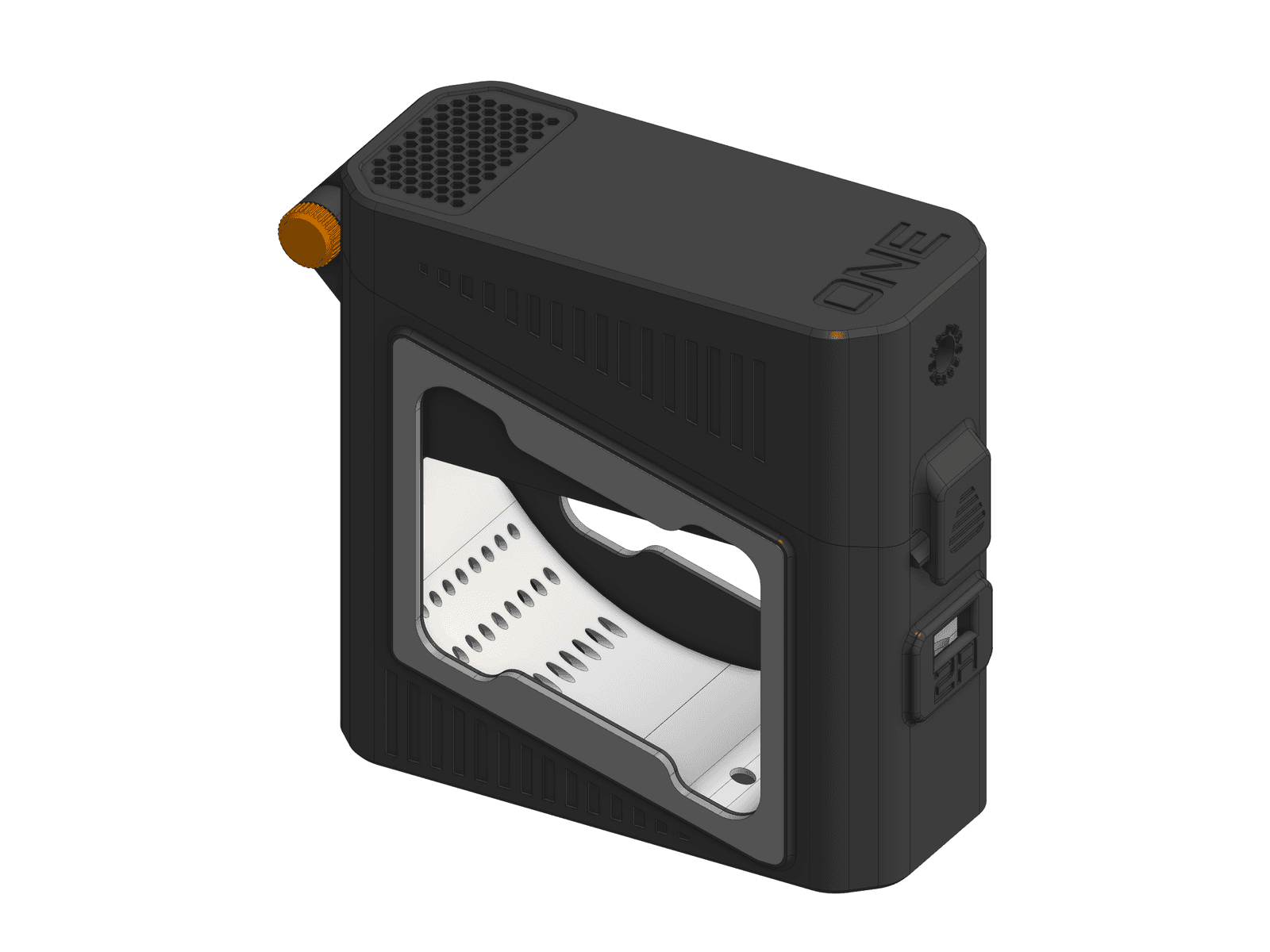
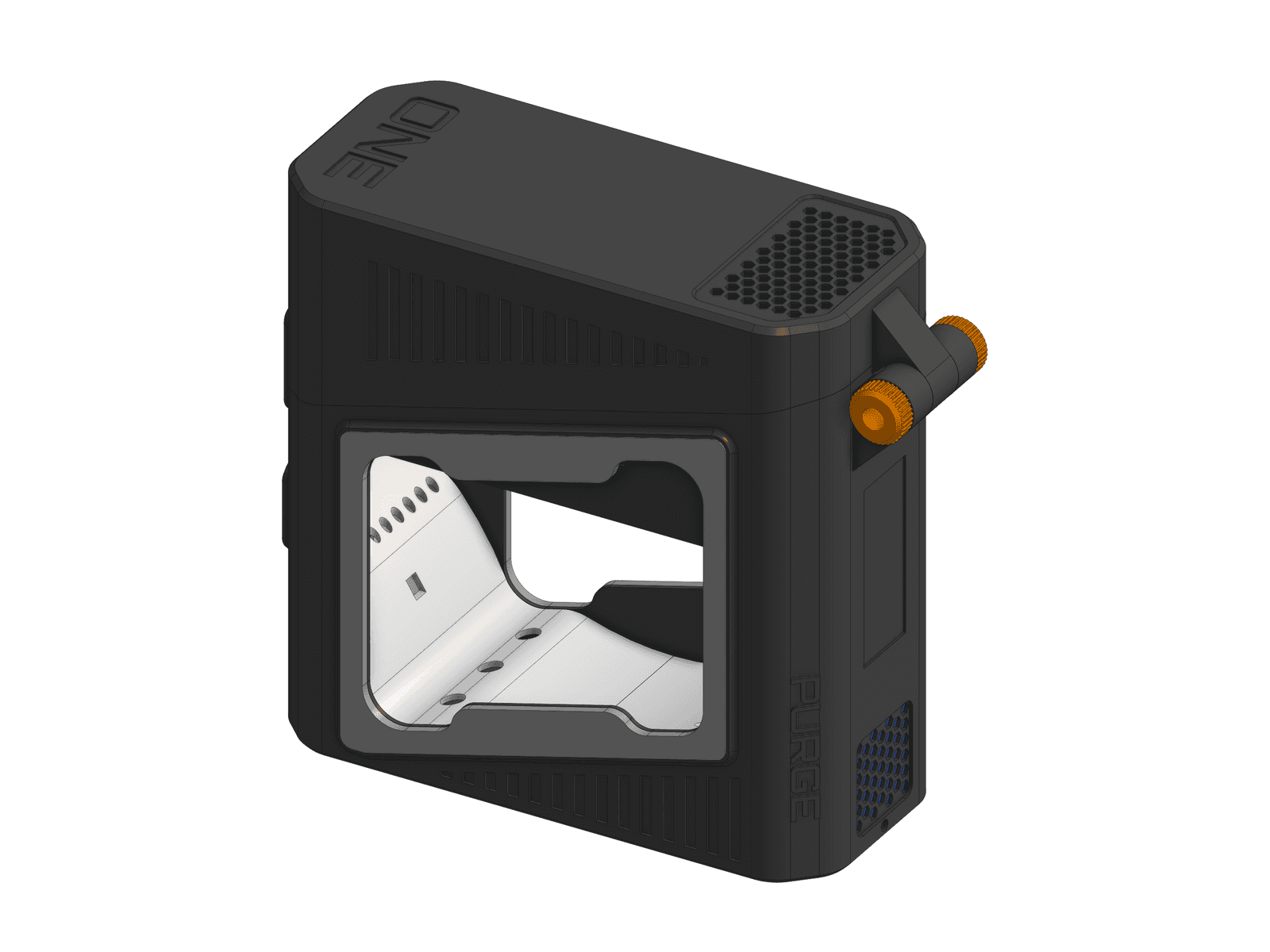
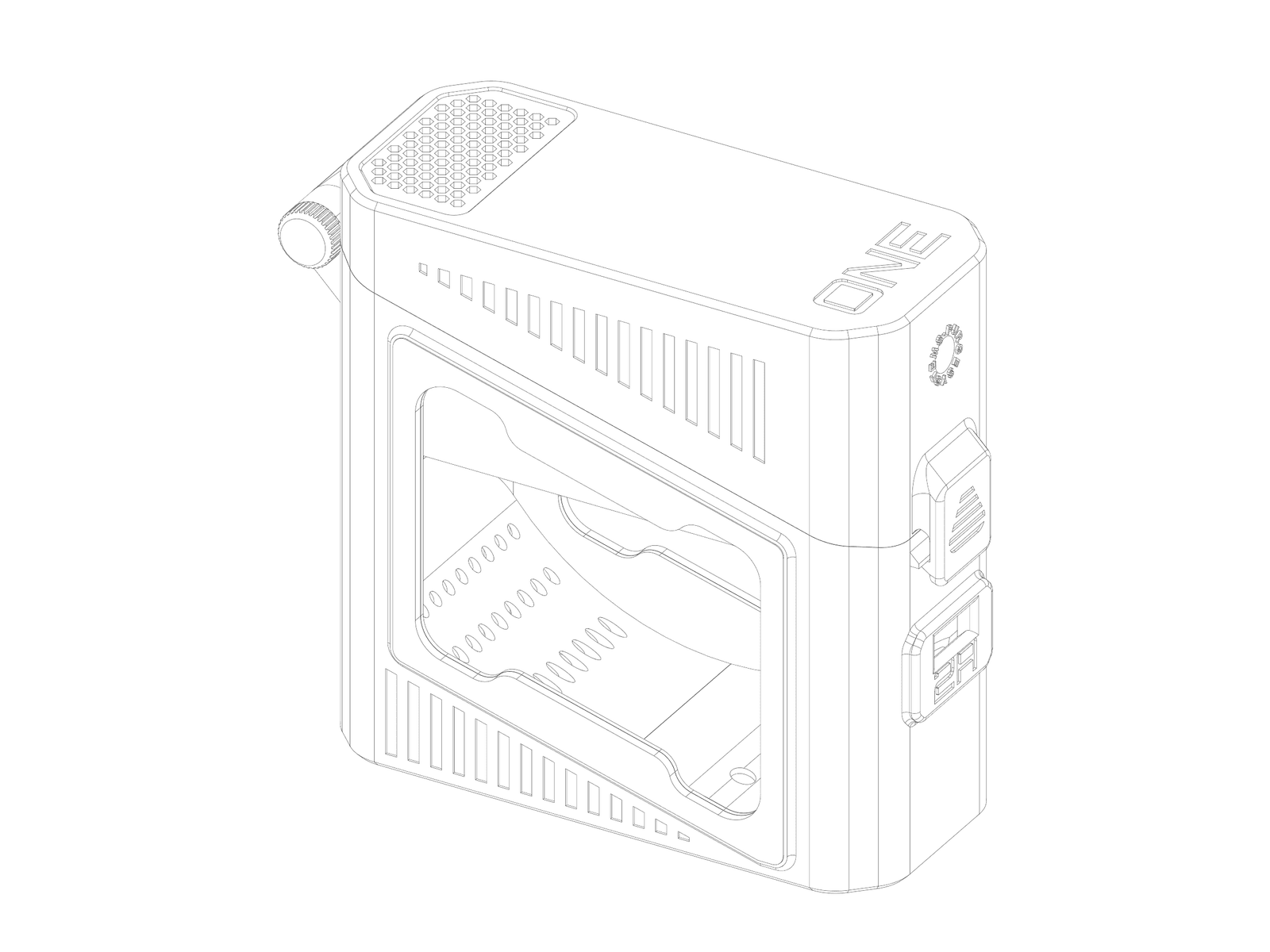
The front chamber had to hold the filament roll while leaving the airflow path open.
The hard part was not the circuit diagram
The control stack used an ESP32, a display, a computer fan, a resistance heating wire and a MOSFET-controlled heater path. The basic circuit was not the real challenge. The difficult part was building a power and thermal architecture that made sense inside a 3D-printed PLA product.
Instead of adding a dedicated AC-to-DC supply module, I repurposed a 12V 1.5A adapter from the workshop and regulated the output for the heater path and the ESP32 control side. That forced the product to be thought through as a power system, not only as a shell with electronics inside.
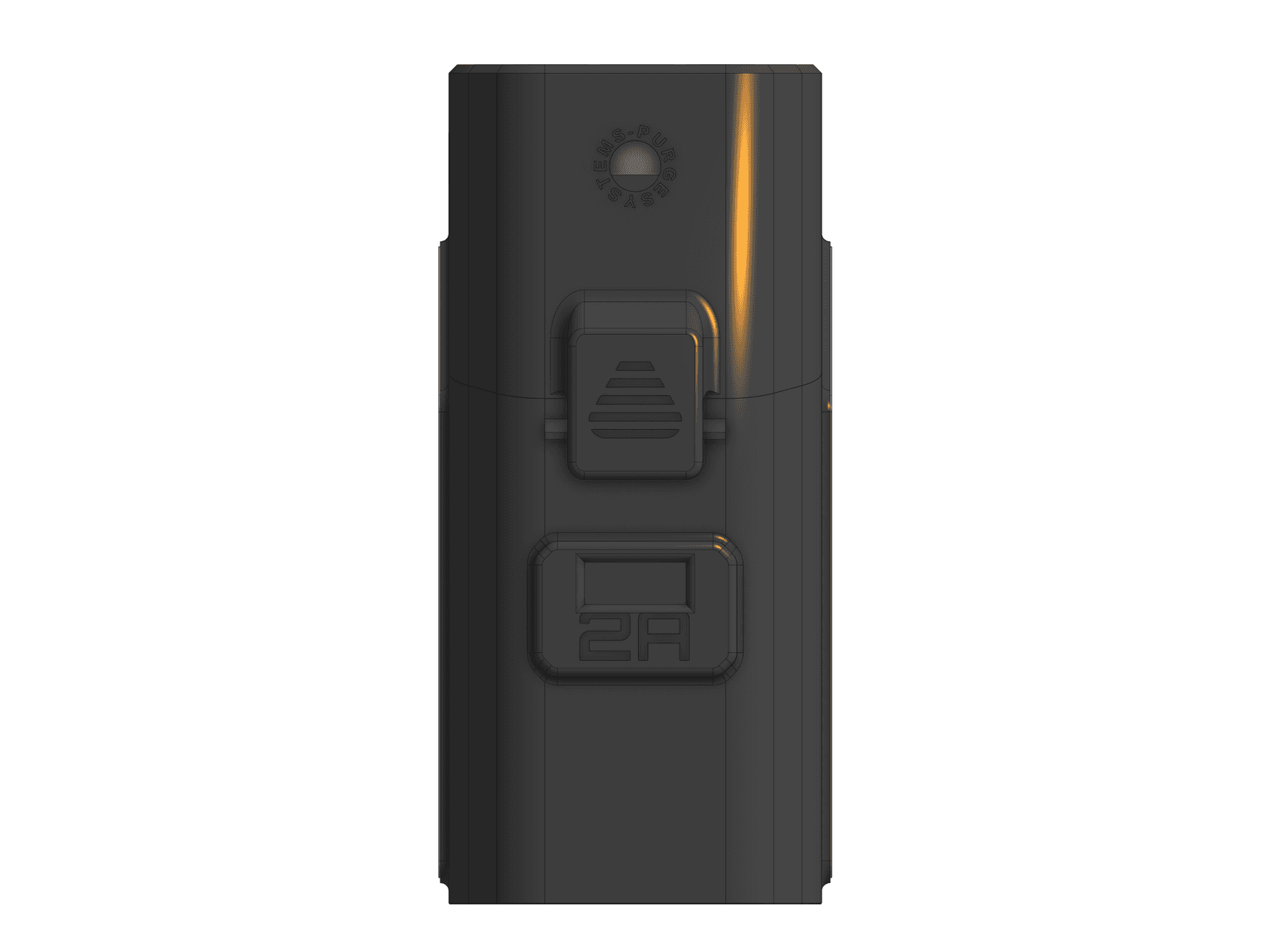
Side-mounted power and control surfaces kept the heated chamber visually and mechanically separate.
Heat needed its own cartridge
Because the enclosure was printed in PLA, the heater wire could not sit directly against the body. Even if the moving air removed part of the heat, the wire would still create a local risk area that could soften or damage the shell.
The solution was an external heater cartridge. It isolated the hot element, gave the air a defined channel, and let the fan split flow between general chamber circulation and a heated stream that entered the drying volume with a controlled curve.
The heater cartridge and curved inlet path turned the enclosure into a controlled air circuit.
The filament seat became the airflow device
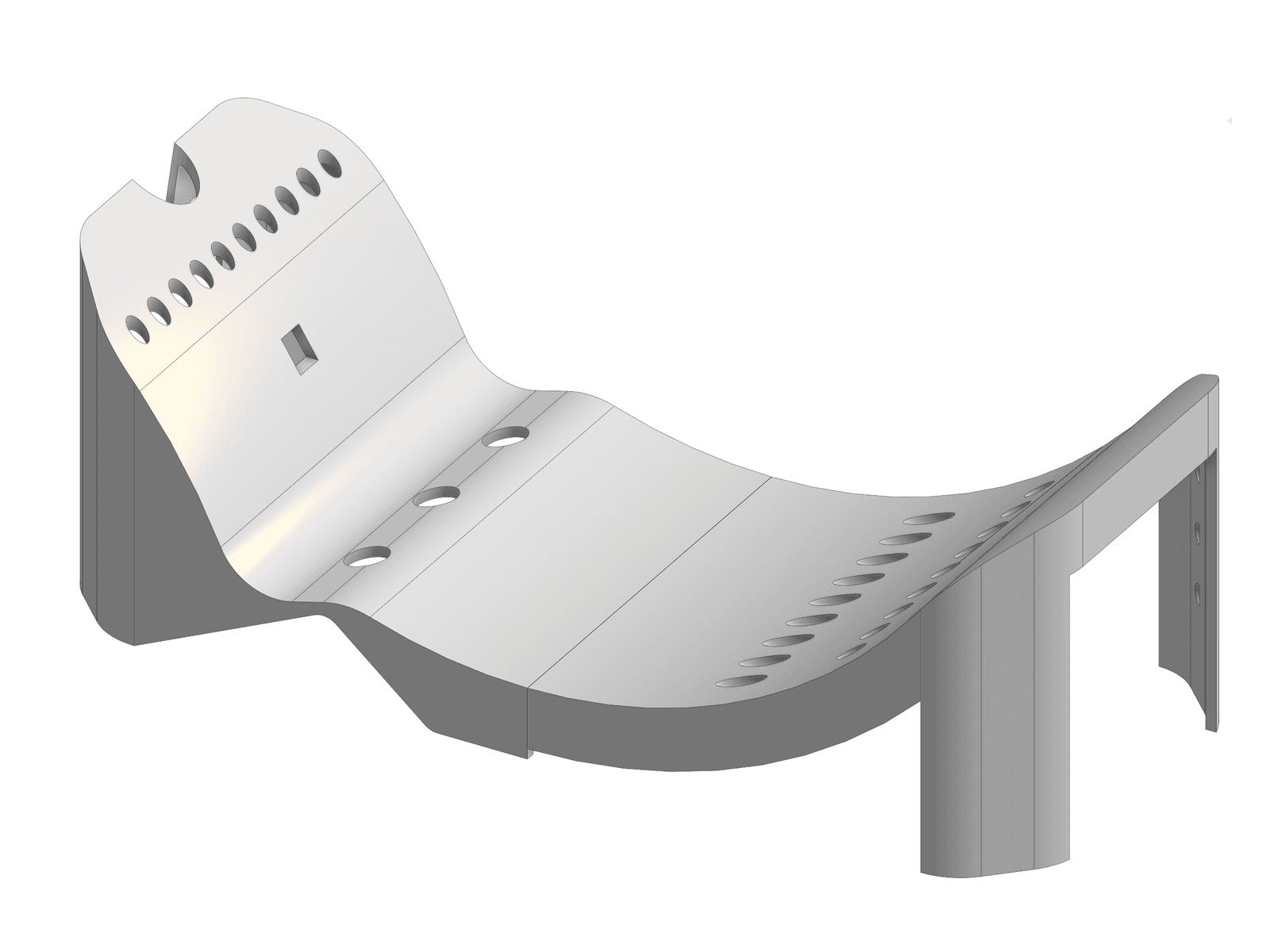
The spool could not just sit in the middle of the chamber. It needed a surface that held a round filament roll correctly while also steering air around it. That is why the internal plate became curved instead of flat.
Simulation and iteration around this cradle geometry improved the system efficiency by 62%. The plate was not decorative; it made the air wrap the spool, complete the inlet-outlet loop and keep the product compact without starving circulation.
The curved cradle followed the spool and guided air, making the mechanical support part of the thermal system.
Calibration turned it into an instrument
The project only worked if the temperature and humidity data could be trusted. We tested the system in school laboratories, calibrated the readings and compared the behavior against the kind of commercial dryers the project was meant to challenge.
That is where Purge One became more than an enclosure. It taught me how product design changes when function leads the form: measurement defines the experiment, the experiment exposes the weak points, and the physical design has to answer them without becoming unnecessarily complicated.
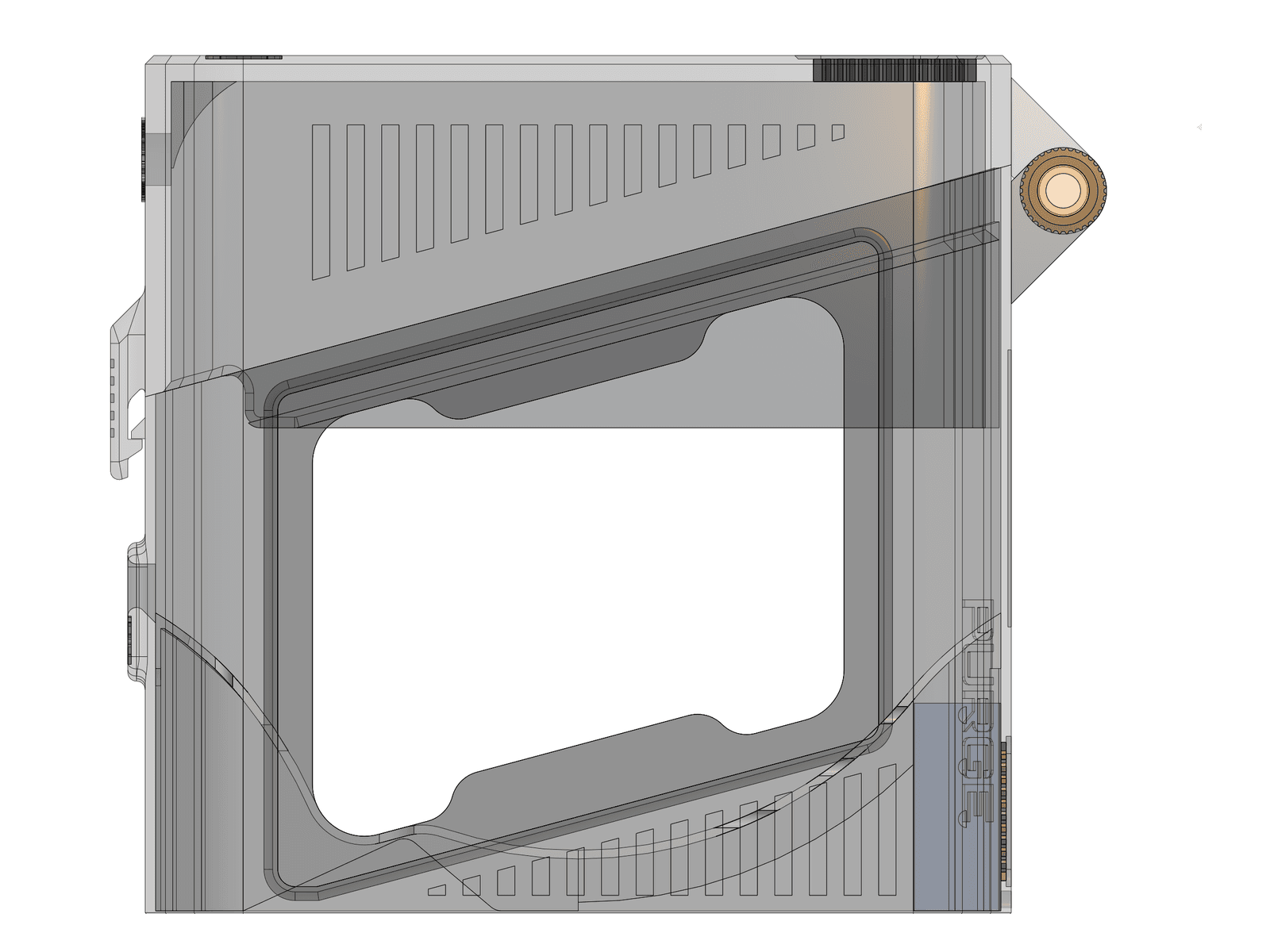
CAD outline view used to keep the enclosure, vents and chamber geometry traceable.