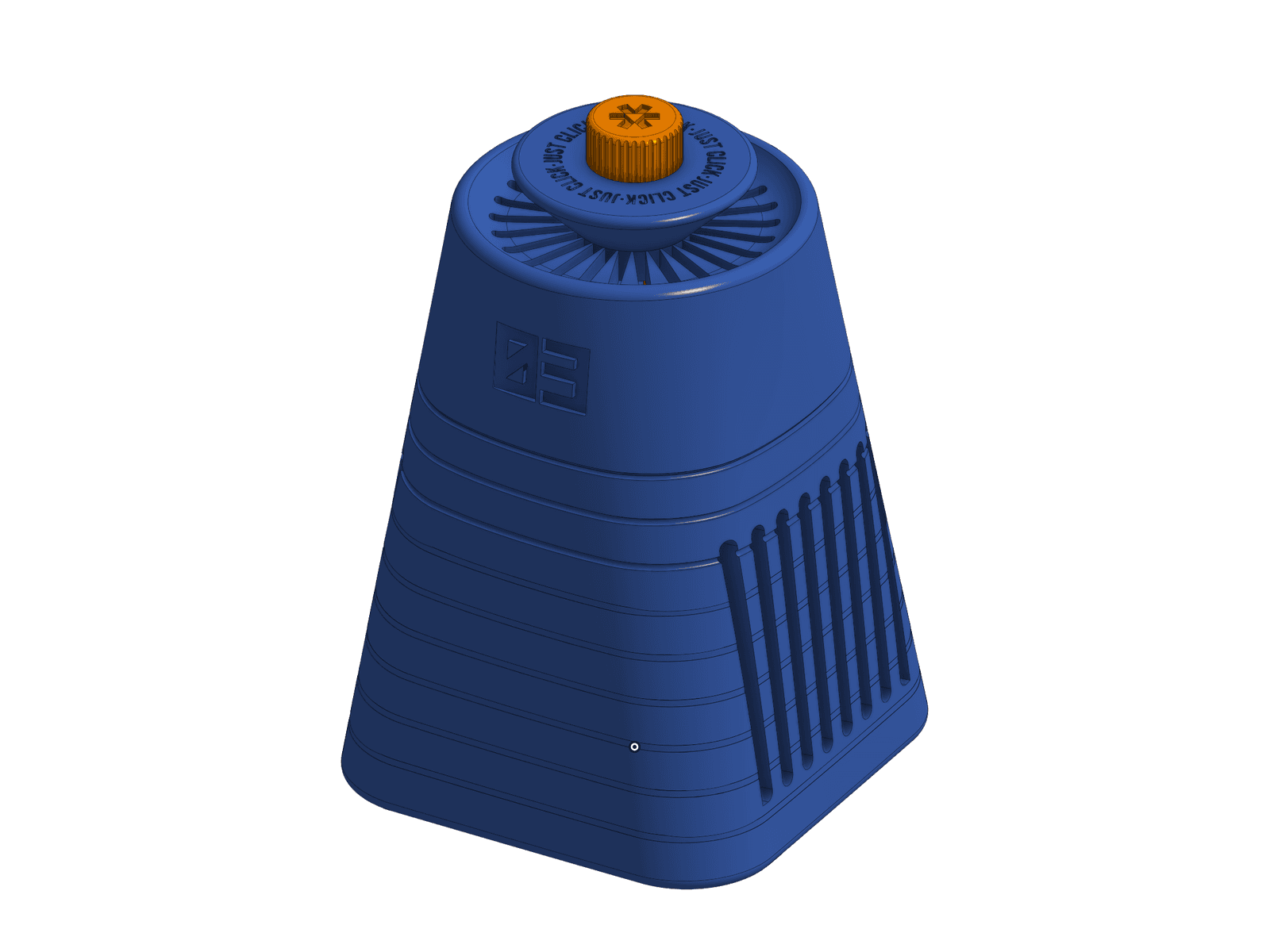
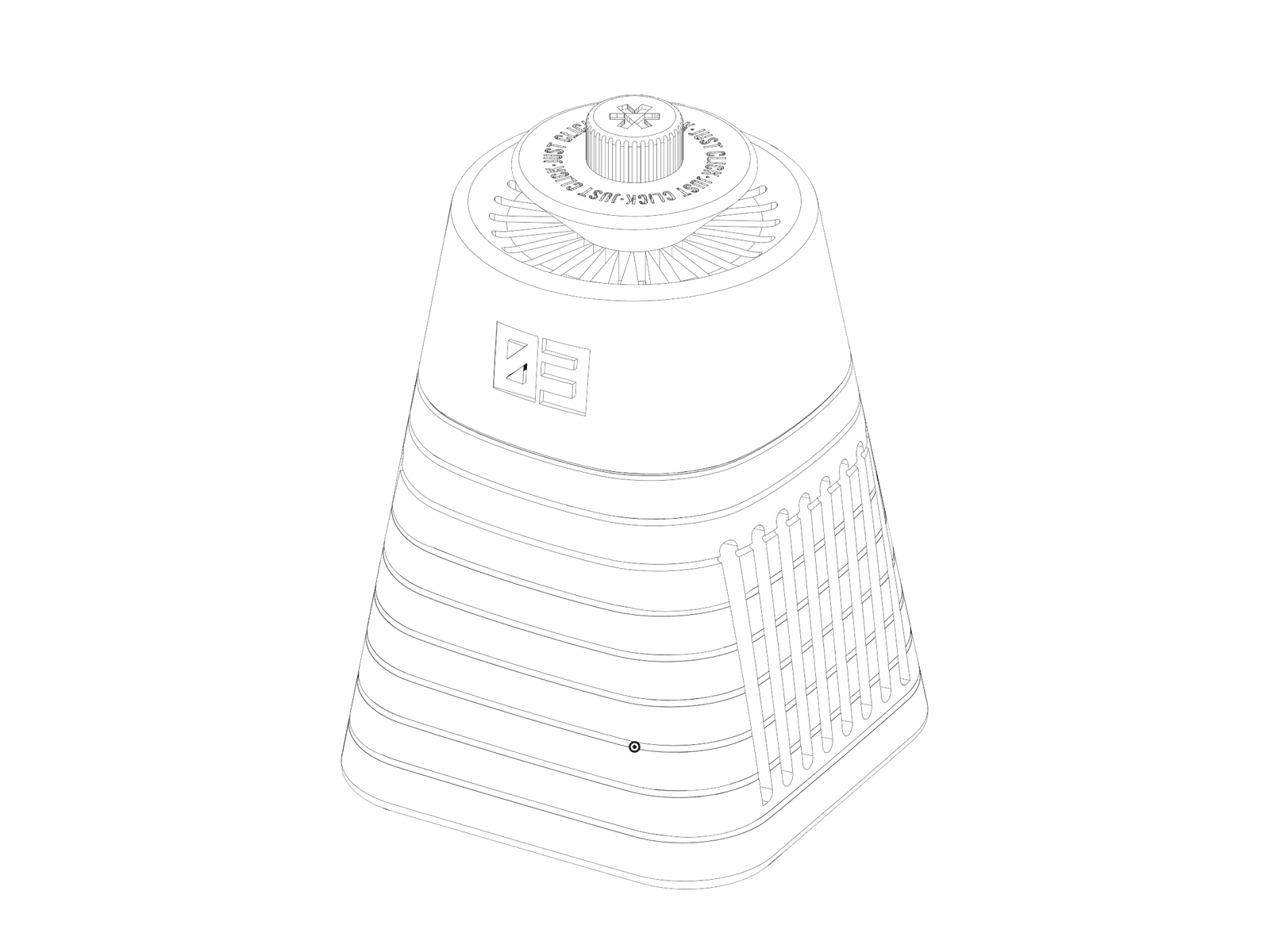
The first product form that made the idea feel buildable.
The first object that proved the loop
Airium matters to me because it was the first time a product stopped being only a thought. I designed the shell, printed the body, placed the electronics, powered the system with two AAA-sized lithium-ion cells and made a simple interaction work: click the top control, spin the fan, pull air from below and push it back through the top outlet.
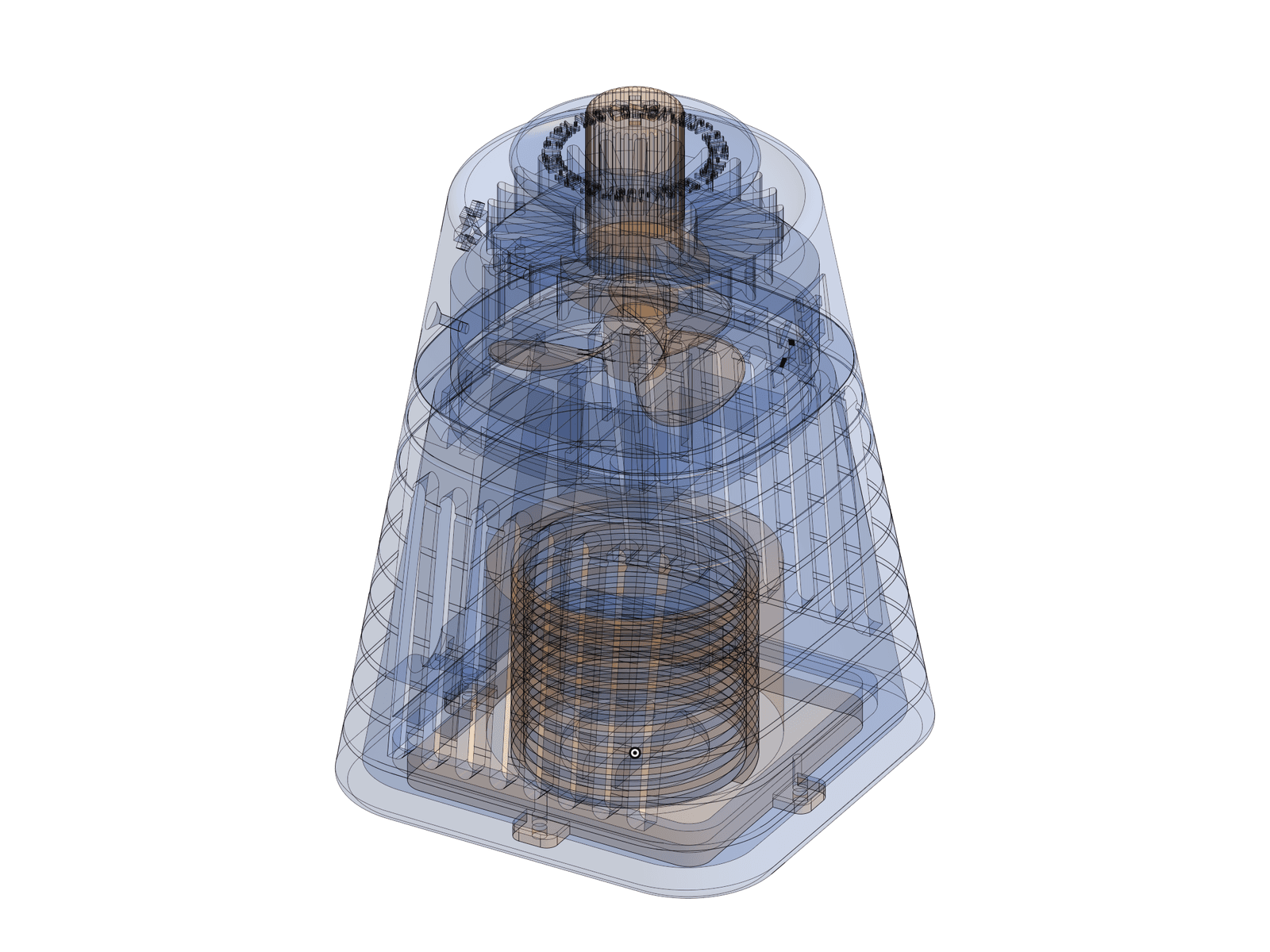
That loop changed the way I understood engineering. The product was small, but it forced every layer to meet: body geometry, airflow, filter access, motor choice, battery space, assembly sequence and the feeling of a physical object that could sit on a desk.
The useful lesson was inside: fan, filter, cells and shell all competing for the same volume.
Testing made the prototype honest
The first version used an improvised vacuum-cleaner HEPA filter because that was the material I could afford at the time. When I tested the result with an air-quality sensor connected to an ESP32, the readings were not good enough.
That failure was the project. It turned a nice-looking prototype into an engineering problem: the DC motor needed more useful RPM, the filter needed a better stack, and the airflow path had to be treated as a system instead of a cavity with a fan inside it.
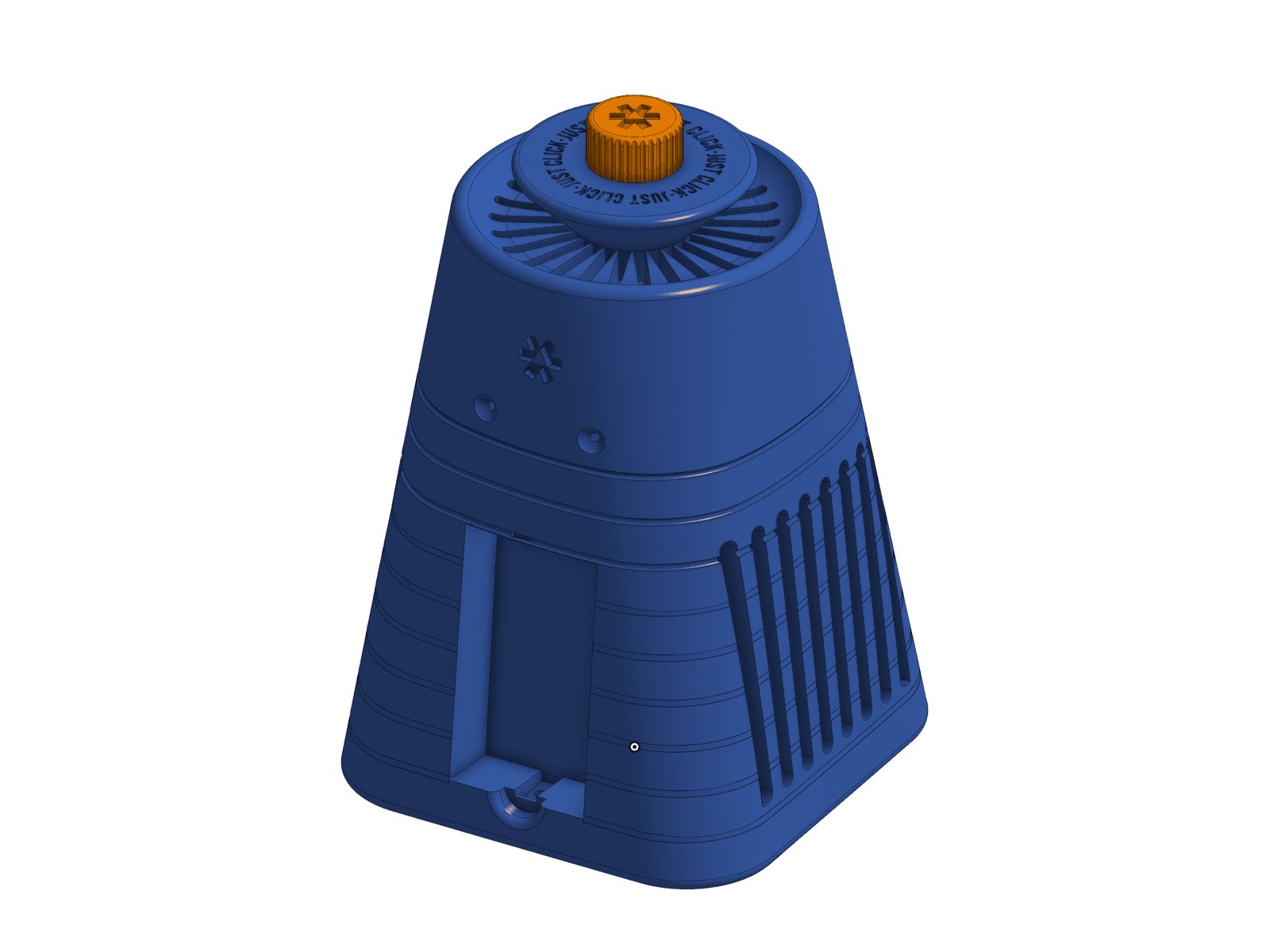
The lower rotating module held natural scent material in the intake path.
The freshener drawer gave it a personality
The most specific detail was the lower freshener module. It rotated out of the body, accepted natural scent material, then locked back into the intake path so incoming air could pass around it before filtration and outlet flow.
I used green tea leaves during the build. It was a simple material choice, but it made the prototype feel less like a fan in a shell and more like a product with a small ritual: open, fill, close, click, breathe.
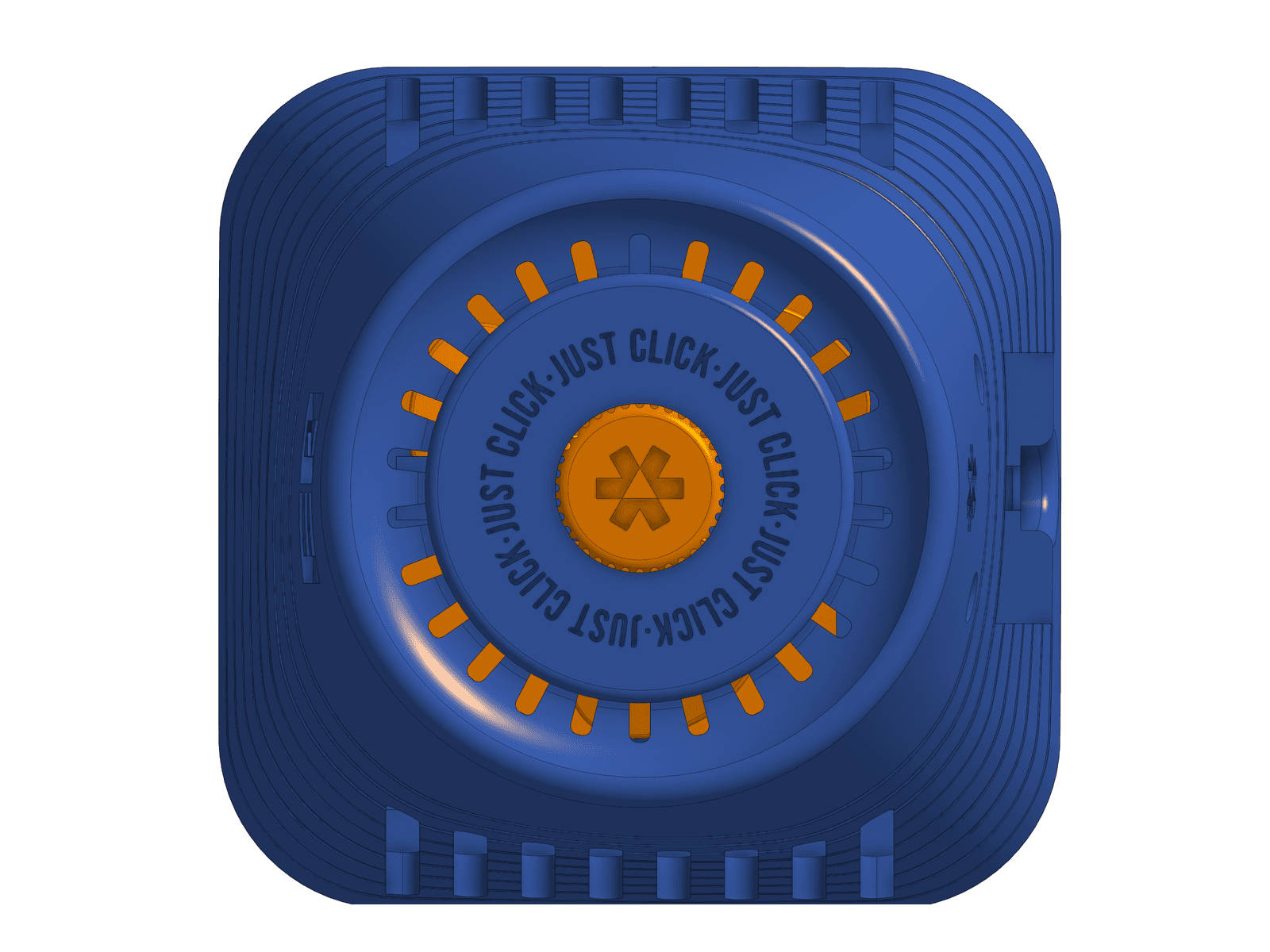
A single click surface, radial outlet and repeated instruction ring kept the operation direct.
What it taught me about manufacturing
After the print, the design questions became practical. Can the parts separate cleanly? Can the filter be changed? Can the motor and cells be assembled without fighting the shell? Can the freshener drawer move without weakening the lower intake area?
Airium was the start of my design-for-manufacturing thinking. It taught me to consider assembly while modeling, to test performance instead of trusting the render, and to treat even a simple object as a chain of decisions that either helps or punishes the build.
CAD outline view used to keep the product geometry readable without turning it into a synthetic render.